Cognitive Accessibility in Investing

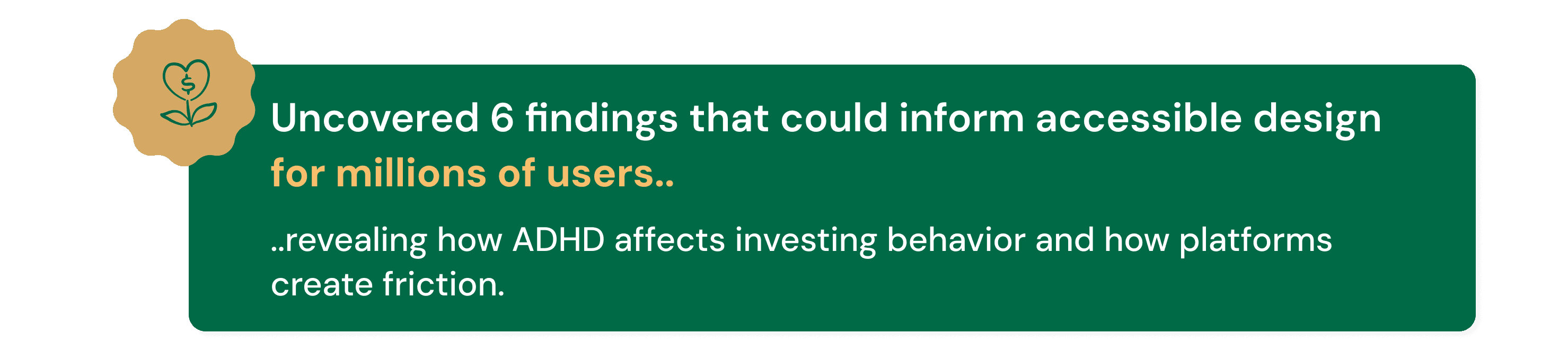
Led research with a top-3 global asset firm on ADHD investing behavior - revealing platform gaps and accessibility opportunities for millions.

Timeline

4 weeks, Fall 2025

4 Weeks, Fall 2025

Team

4-person student research team

My role

Research Lead - designed screener and protocols, coordinated recruitment, conducted interviews, led synthesis

The Impact
The Challenge

ADHD affects information processing, impulse control, and sustained attention - the core cognitive functions investment platforms demand.

Without this foundation, platforms risk excluding millions of potential users who face unique barriers to confident investing.

How We Got There

Scoping the Research

First, we started exploring cognitive disabilities and financial management broadly. However, four weeks wasn't enough for multiple populations, so we narrowed to adults with ADHD who actively invest.

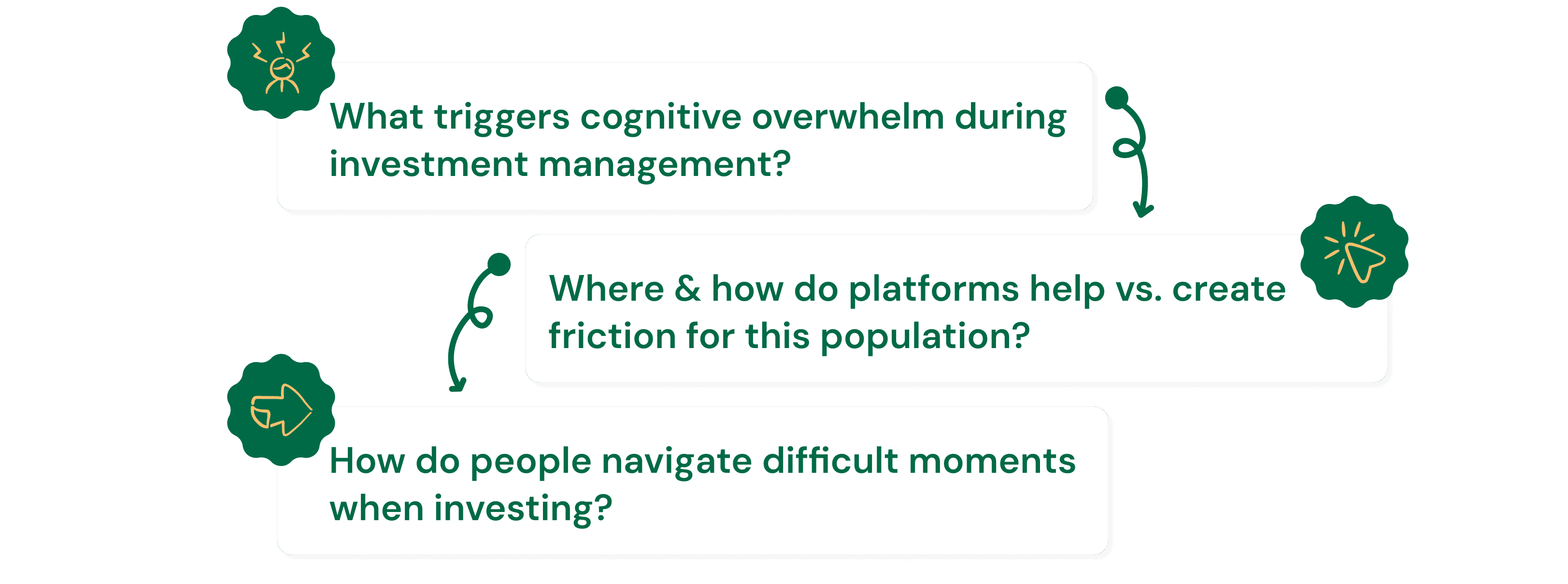
This focus let us define three core research questions:
Designing the Study

I designed screening criteria to find a narrow intersection: adults with ADHD who actively manage their own investments (not just employer 401k). I built in quality checks - behavioral validation questions, engagement frequency, and attention checks - to ensure genuine experience.

I created two complementary protocols:
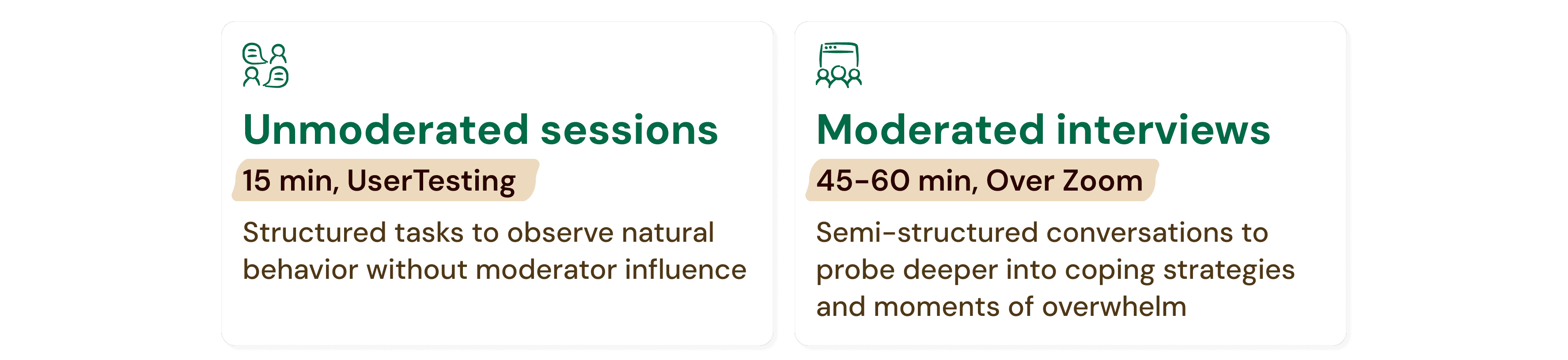
We coordinated recruitment across UserTesting, Respondent, and Tetra Insights simultaneously - each platform gave us access to different participant pools.

Data Collection

I led 2 moderated interviews and observed 3 additional sessions as note-taker. In total, we gathered data from 10 participants, all adults with ADHD who actively manage their own investments.

  • 5 moderated interviews (45 min each)

  • 5 unmoderated UserTesting sessions (15 min each)

Analysis & Synthesis

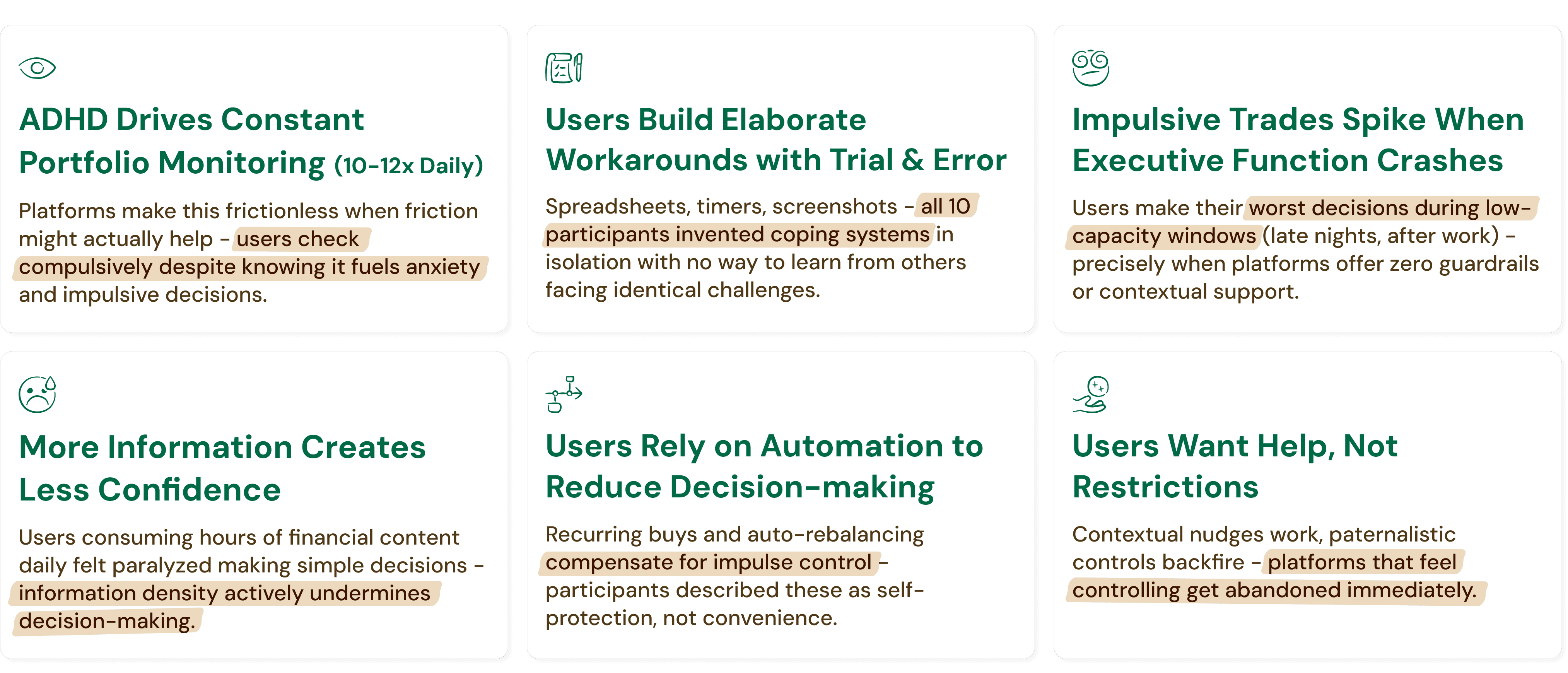
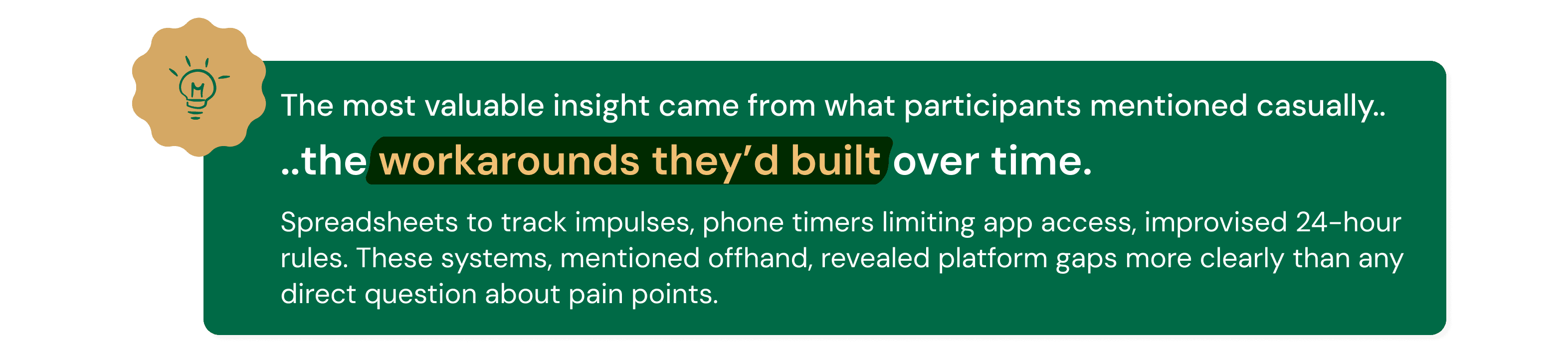
I analyzed 3 participants independently before leading the team through synthesis to identify patterns across all 10 participants. Individual analysis before group synthesis gave each researcher deep familiarity while preventing groupthink. After several rounds of refinement, 6 core themes emerged.
Design Implications

Participants trusted strategies from others with ADHD more than expert advice from financial advisors. Creating space for users to share coping mechanisms ("I only check on weekends," "I set a recurring $50/week into index funds to avoid decisions") would let the community build collective knowledge instead of everyone solving the same problems alone.

Participants wanted help resisting impulses, not prevention - examples like "you've checked 12 times today, here's your weekly summary instead" or brief waiting periods before trade execution. Simplifying information architecture and offering progressive disclosure (minimal by default, details on demand) reduces the friction that causes users to avoid the platform entirely.

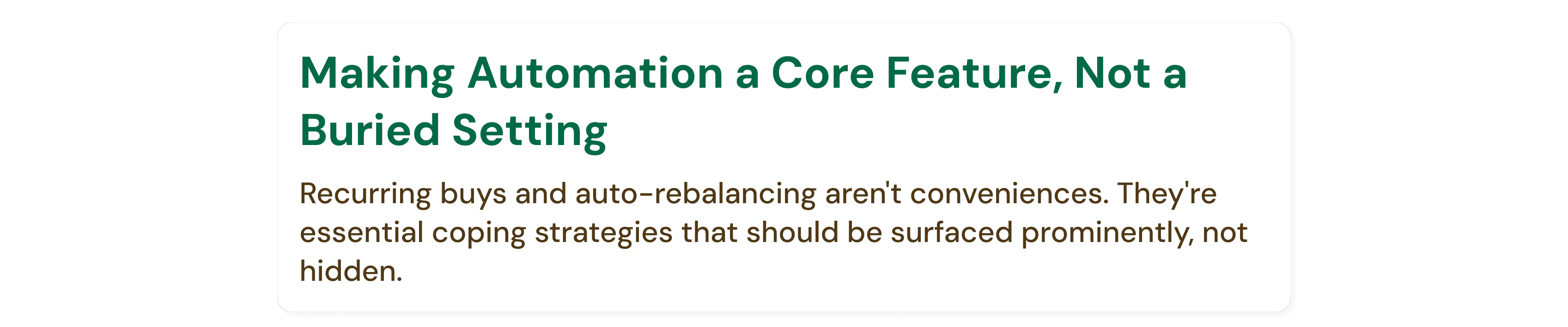
Platforms currently hide automation in settings menus. Surfacing it early and framing it as a strategy for managing impulses - rather than just a convenience feature - aligns with how participants actually use it.

"The second it feels like the app is parenting me, I'm out."

Helpful features feel transparent and optional. Explaining why something exists ("many investors find waiting 24 hours reduces regret"), letting users customize thresholds, and making everything opt-in keeps support from feeling controlling.

What's next: We're now applying these insights with our partner to design more accessible investment experiences for millions of users.

Reflections

Listen for what participants don't emphasize

The spreadsheets, timers, and improvised rules came up casually - not from direct questions we asked. Those details became our strongest findings. Next time: watch for offhand mentions and what people have built on their own - both reveal gaps the original questions missed.

Recruiting for edge cases

Our participants were relatively successful despite ADHD. We missed people who've given up entirely - their experiences would have revealed different platform failures. Next time: intentionally screen for disengaged users, not just active investors.

Narrow scope early

Focusing on "ADHD and active investing" instead of "cognitive disabilities and finance" felt limiting but made every finding actionable. Next time: push for that narrowing in week one, not week two. Tight scope enables depth.

Let's connect :)

Always happy to chat about design, research, or potential opportunities.

Let's connect :)

Always happy to chat about design, research, or potential opportunities.

Let's connect :)

Always happy to chat about design, research, or potential opportunities.

©

2026