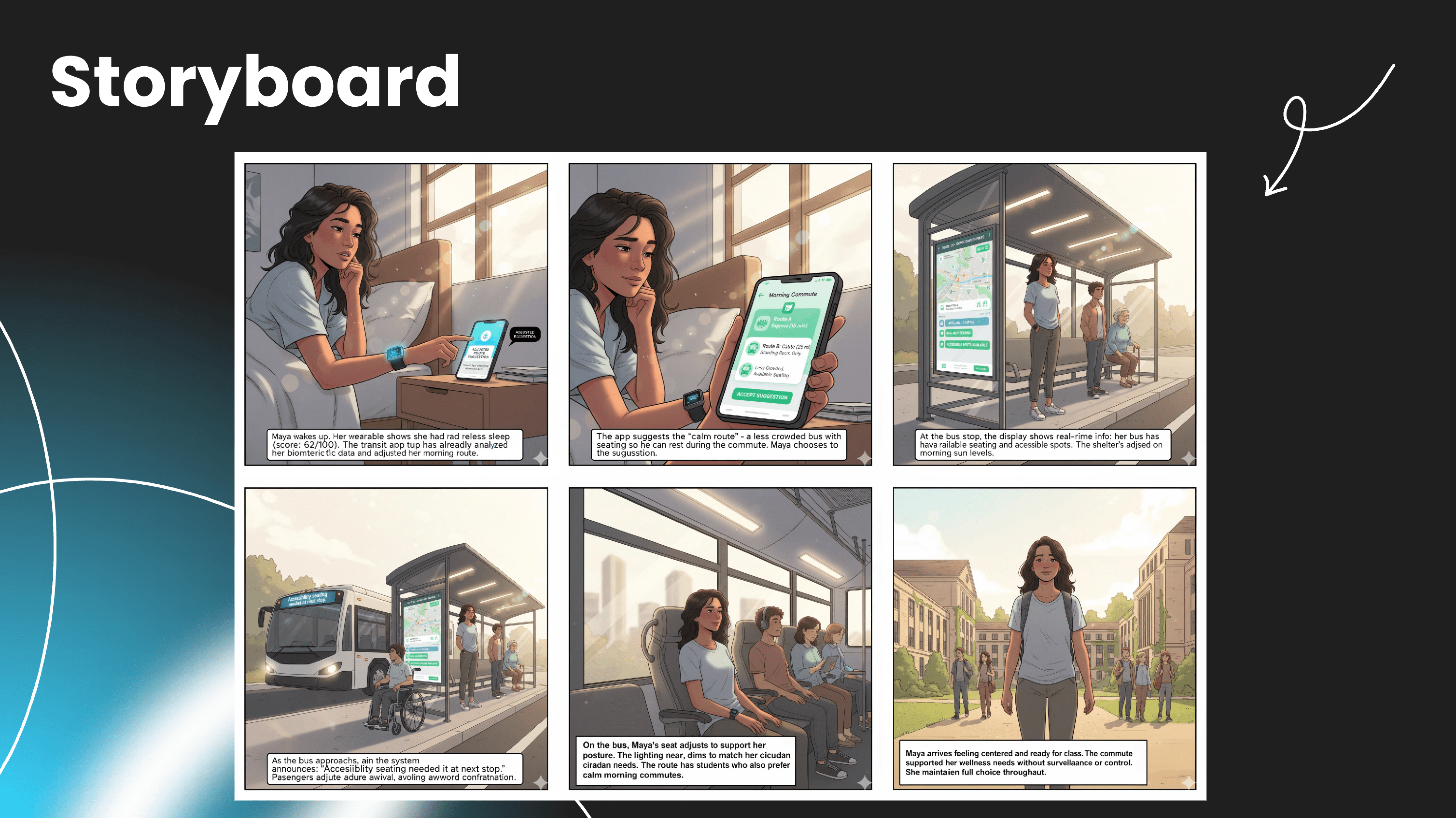
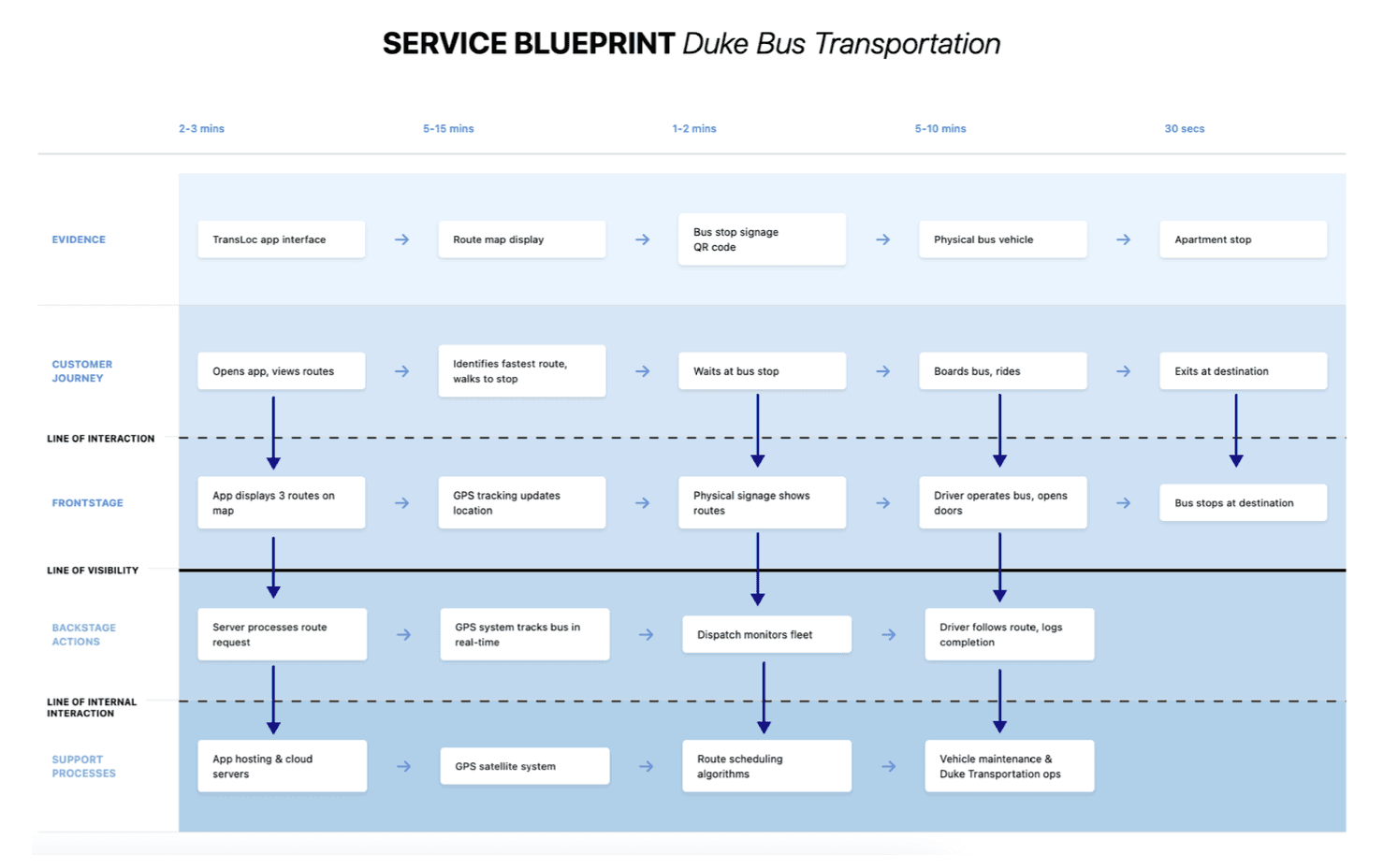
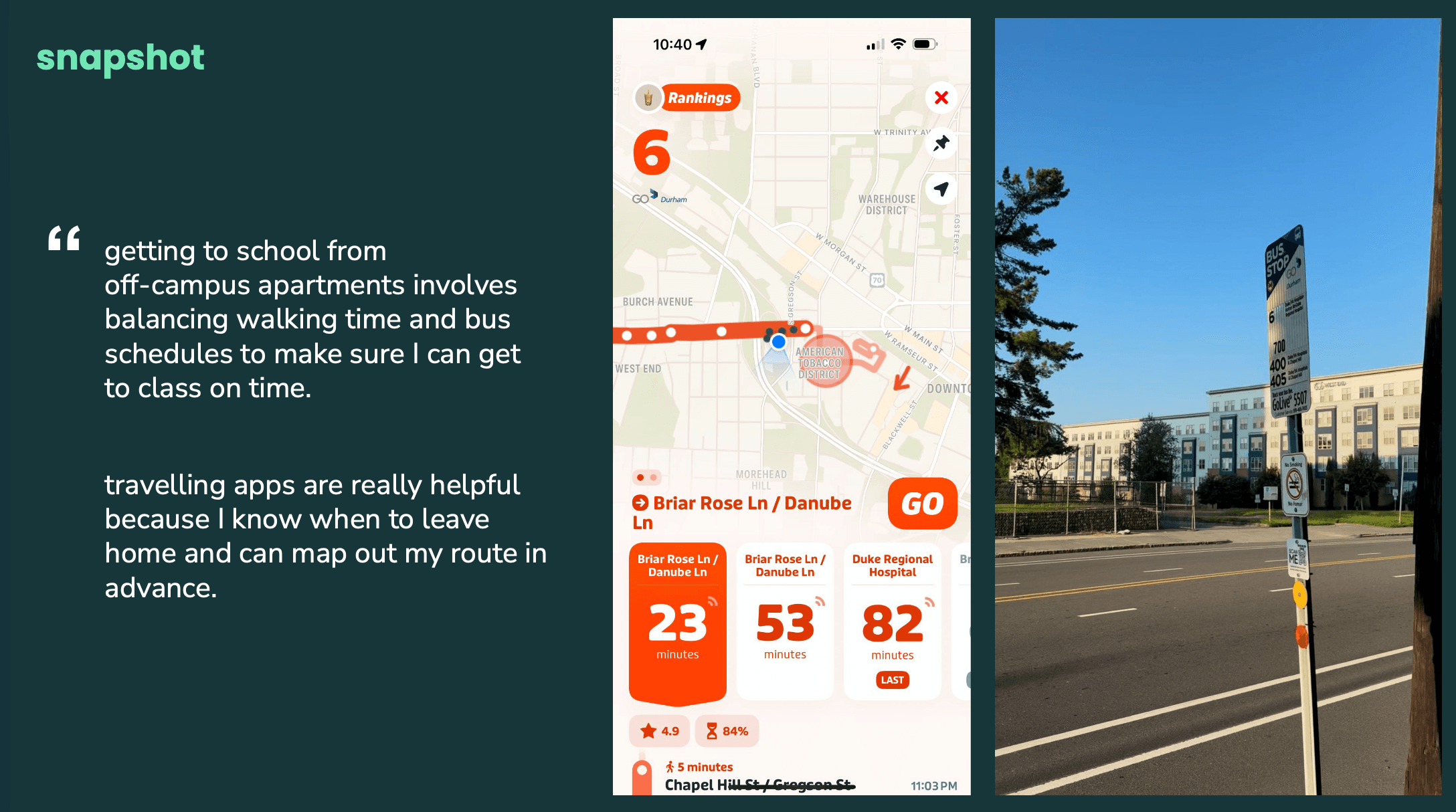
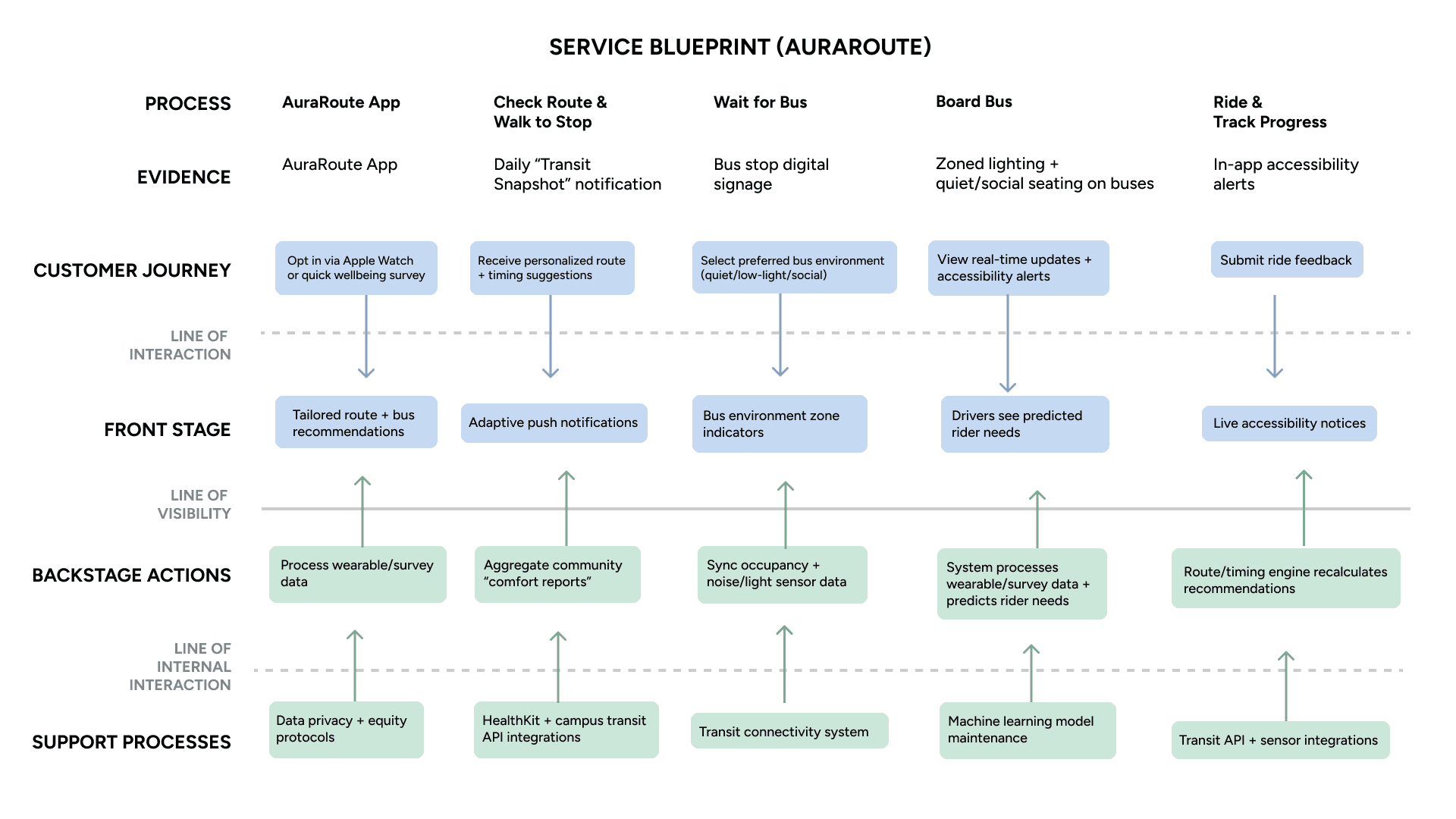
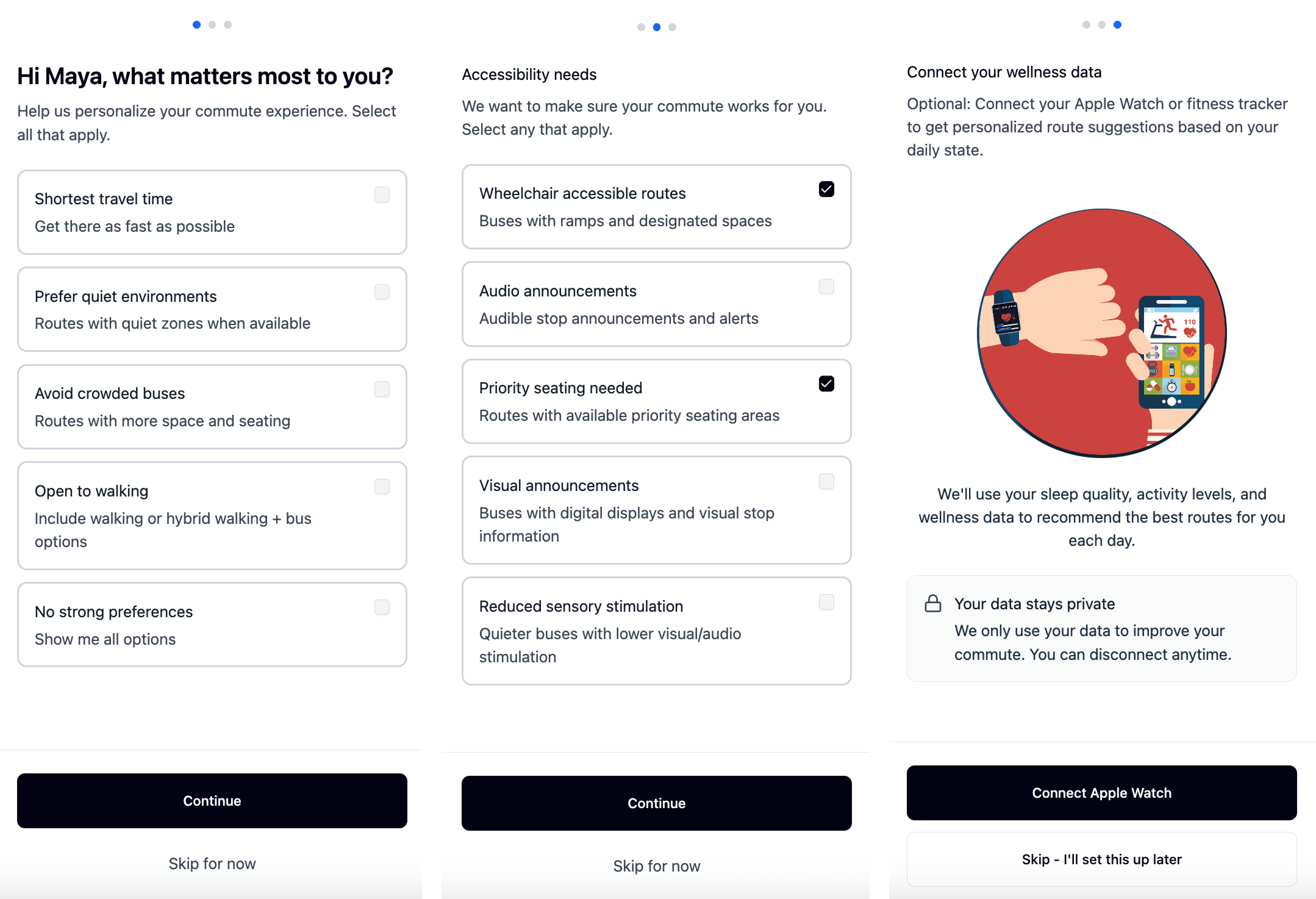
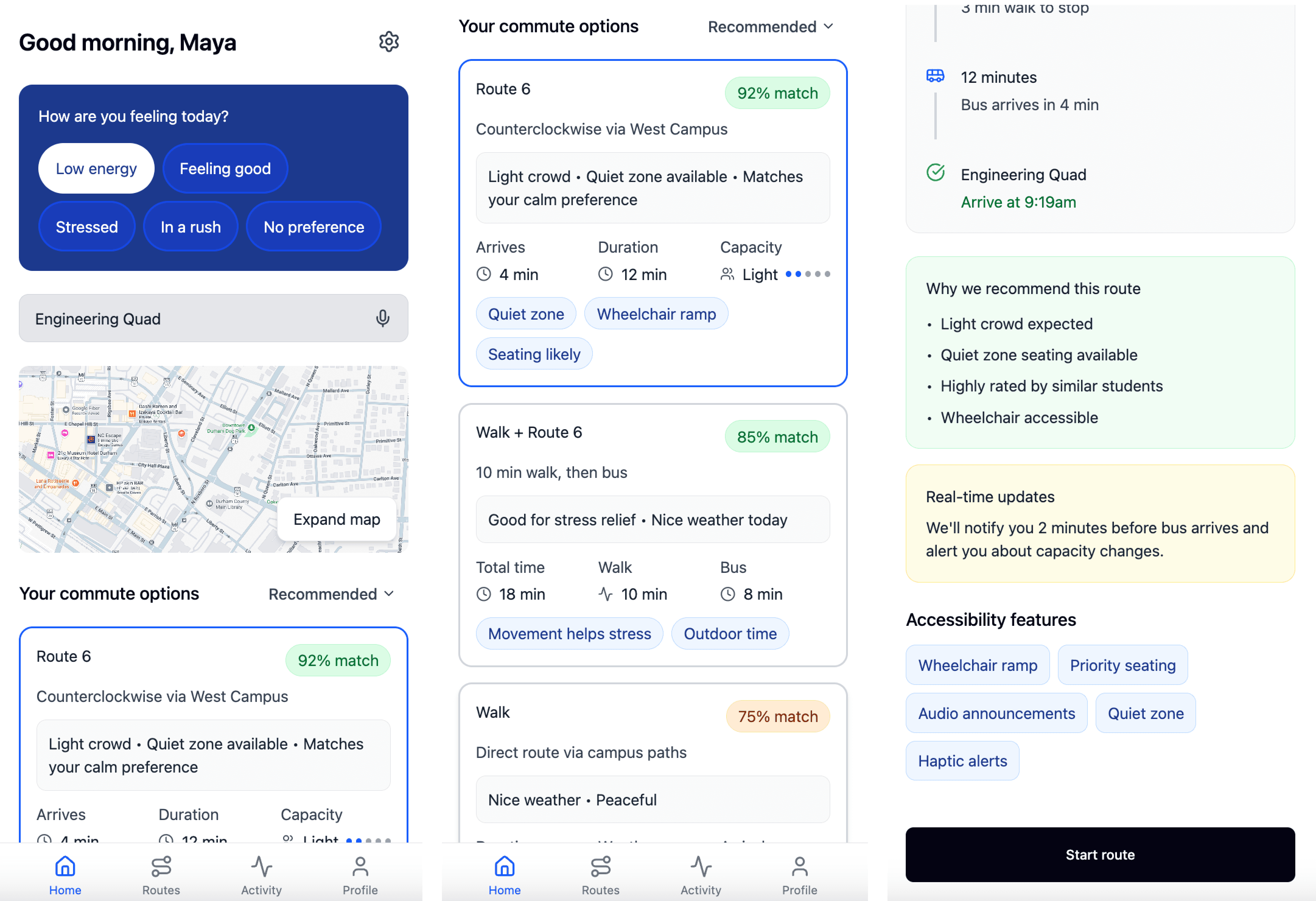
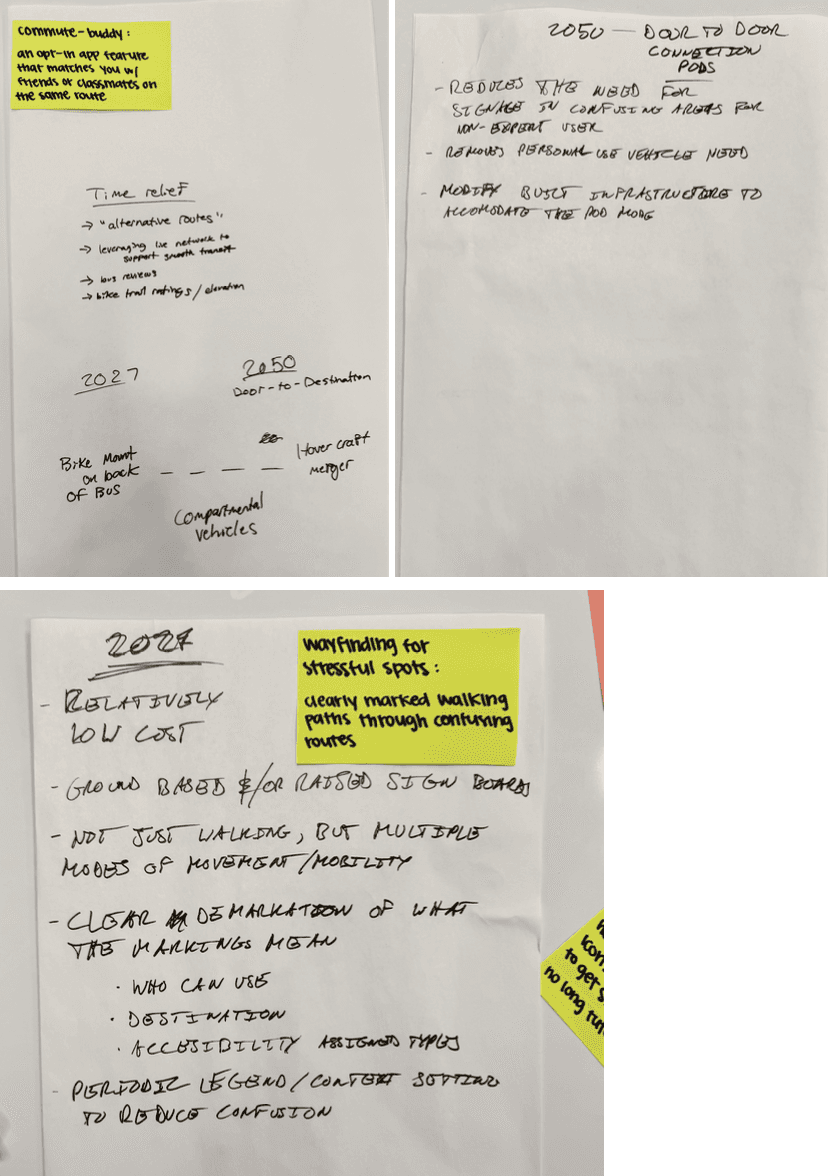
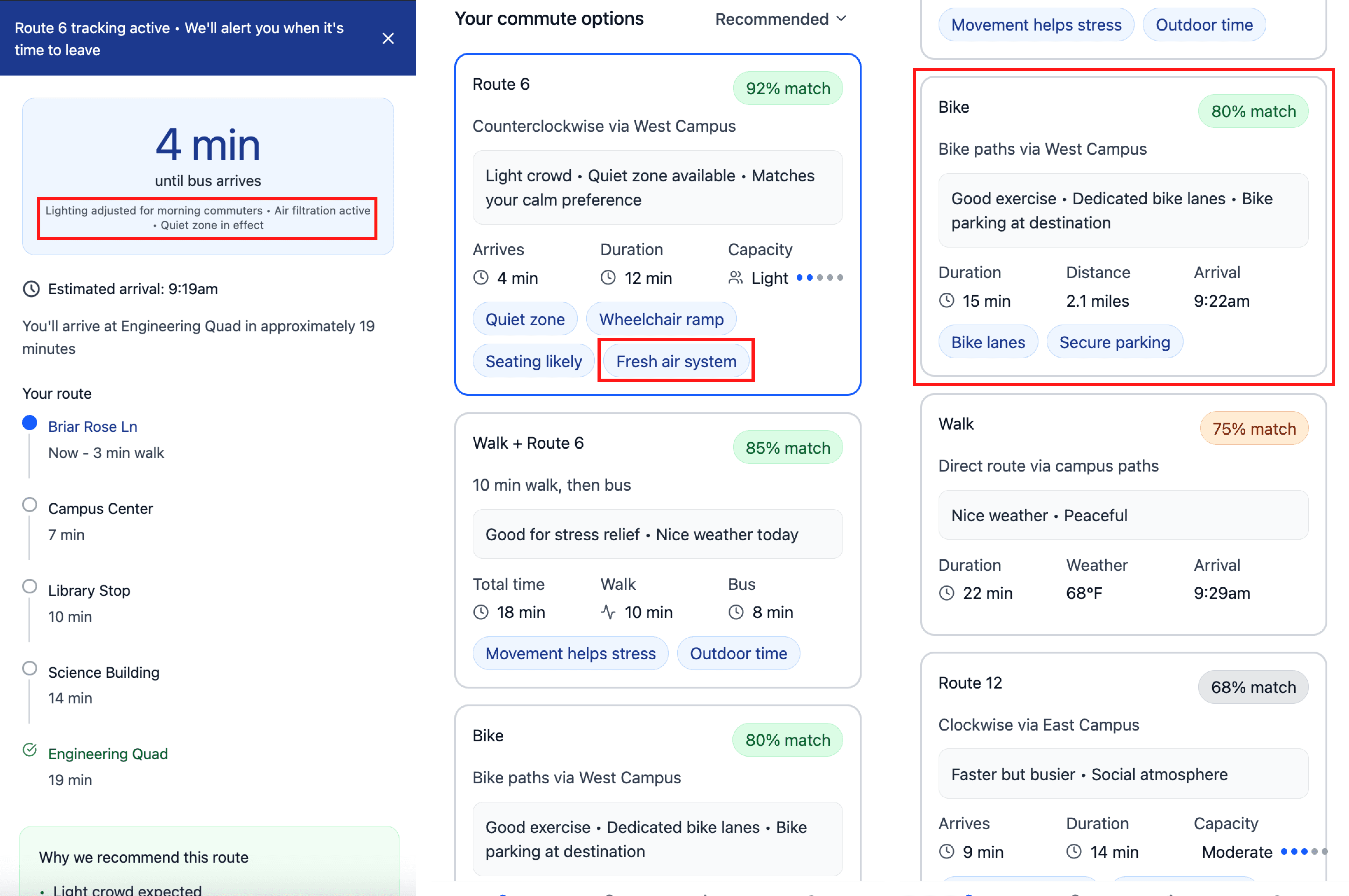
We ran three rounds of participatory workshops with students, faculty, and practitioners. Four activities moved participants from individual reflection to collective future-building: mood check-ins, happy/frustrated commute moments, pick-a-path co-design, and future postcards. Here are the key findings:
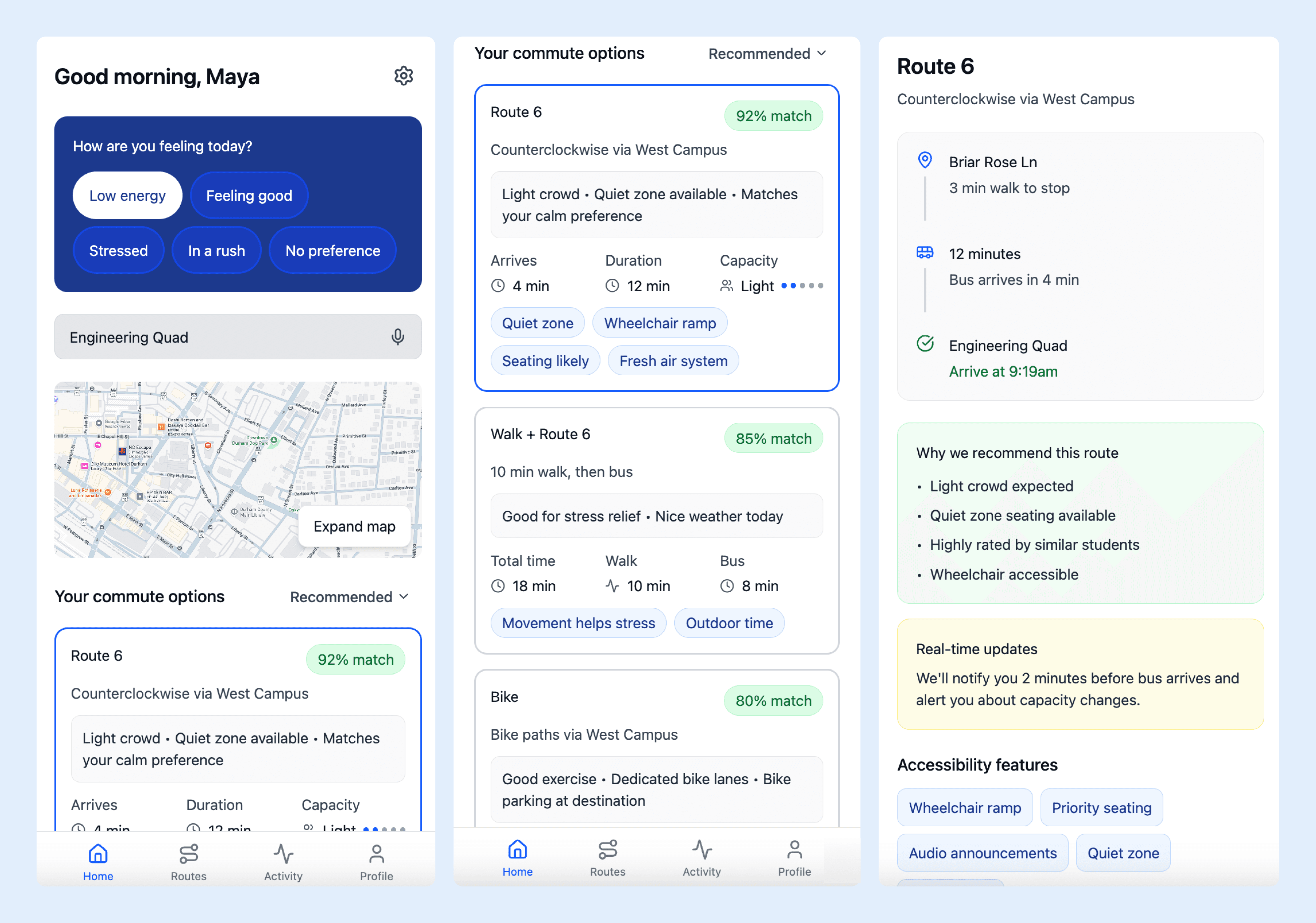
1. Utility first, wellness second. Students are always rushing. "Will I make it to class?" matters more than "Am I stressed?" Personalization must be optional.
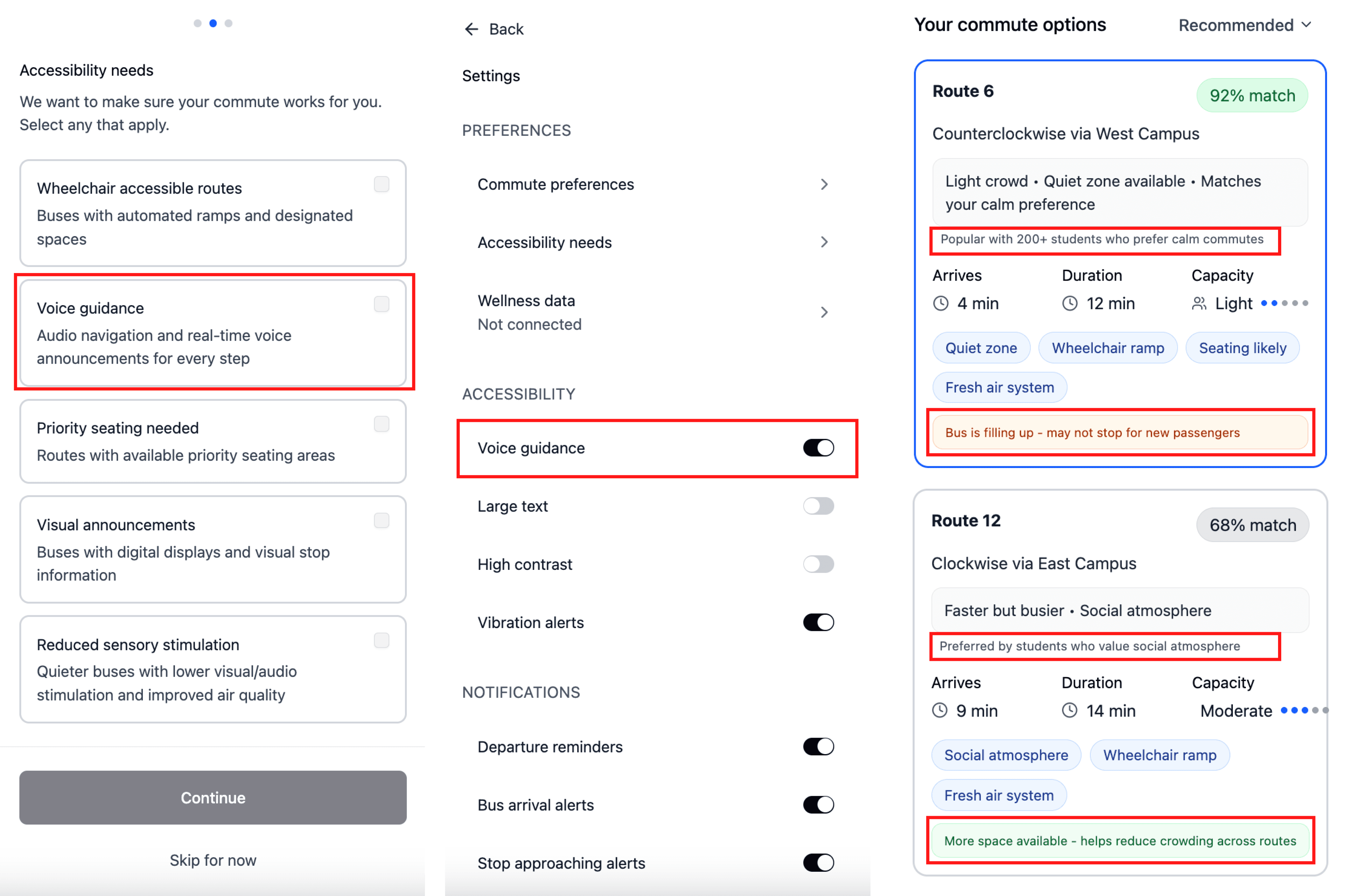
2. Comfort is micro-sensory. Itchy noses from vibrations, bad smells, losing balance on turns. Comfort goes beyond seats and temperature.
3. Uncertainty creates cognitive load. "I just want to know where to go." Stress comes from confusing signs and not knowing if you're heading the right way.
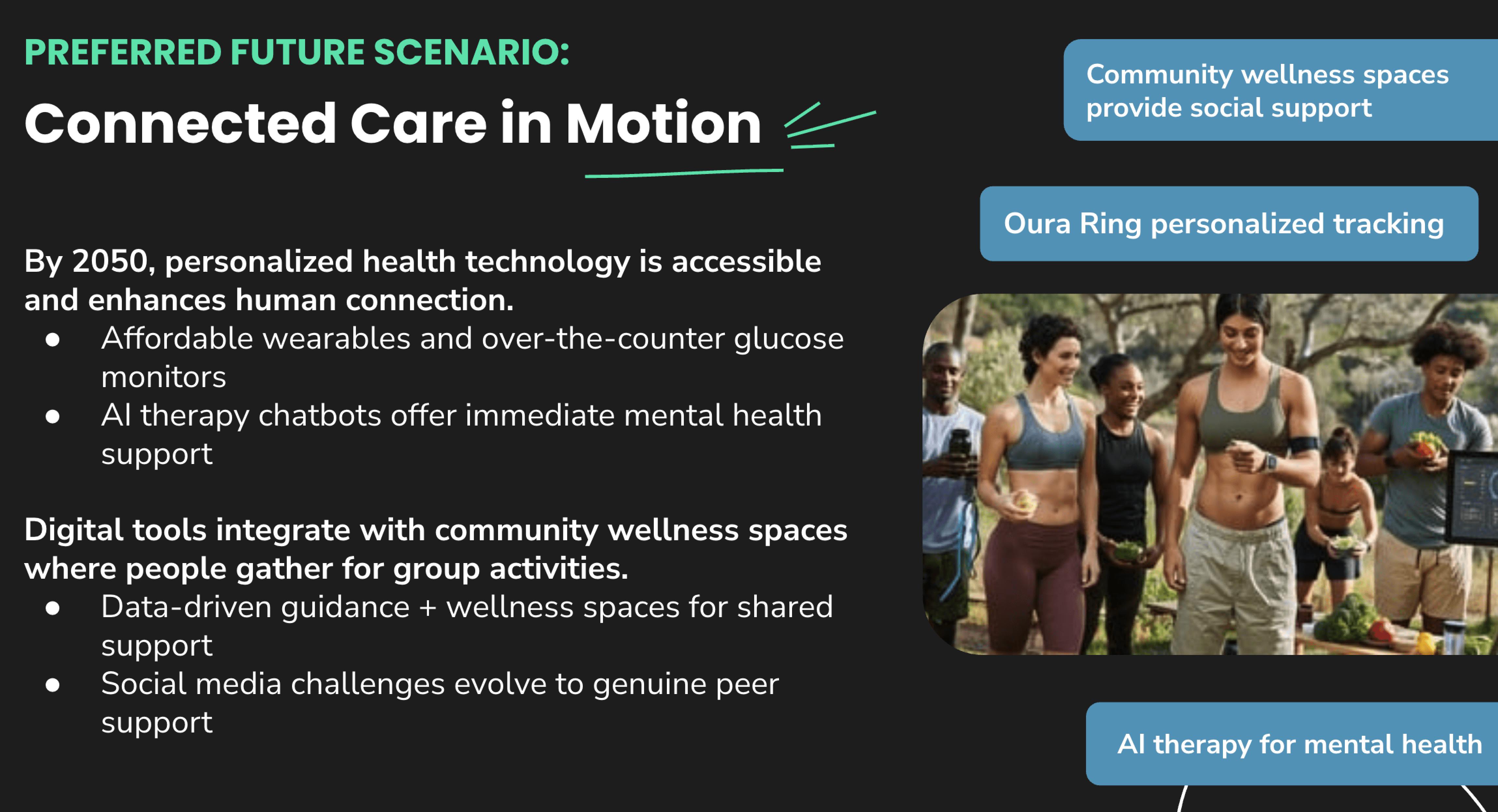
4. Social features must be opt-in. People liked low-pressure connection but didn't want to feel watched.
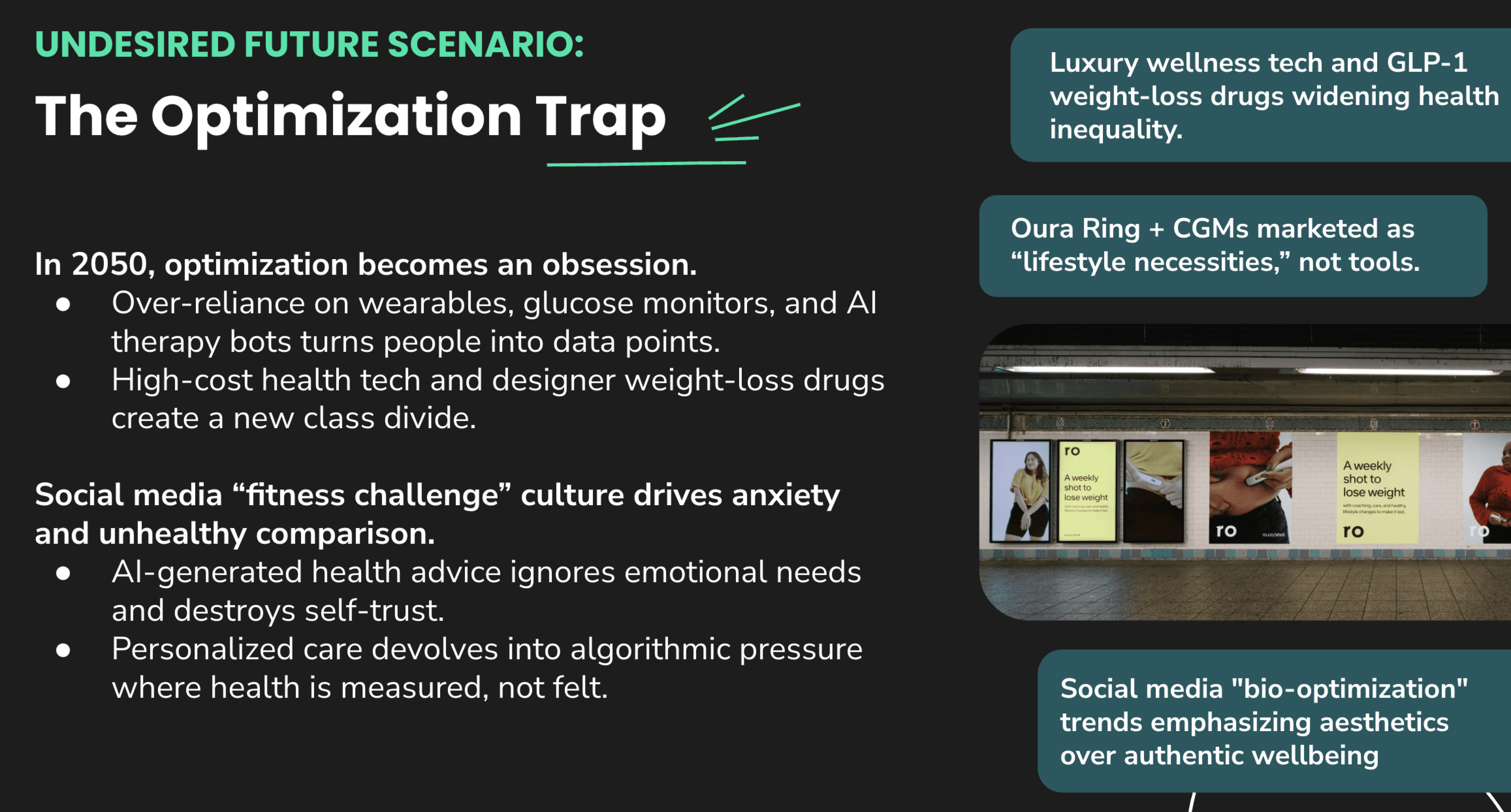
5. Collective adaptation over personal optimization. The strongest finding. Participants consistently designed systems that adapt for groups — better air filtration for everyone, reduced wait times across the network — and pushed back against individual profiling.